A fast cruiser for overseas service
Triple-screw propulsion and a high designed speed produced a versatile cruiser for fleet scouting and distant deployment.
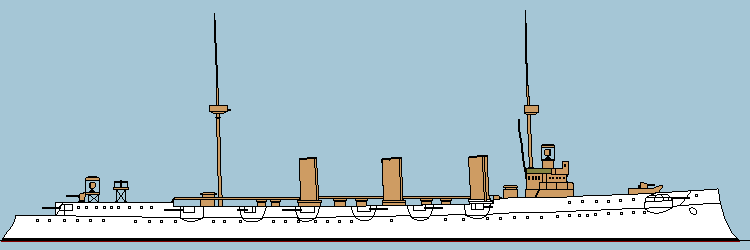
Design and service
Kaiserin Augusta combined high speed and worldwide reach at a moment when Germany was defining the role of its modern cruising fleet.
The full story
The Kaiserin Augusta was the first cruiser of the German navy without sails and the first German warship with three shafts. It had an engine that was four times as powerful as the last cruiser corvette, the Charlotte, and a speed advantage of 33%.
As this ship introduced several new features, it is no surprise that its deign had several problem. During a weapons refit only one year after being commissioned, the ship's structure had to be enhanced in many structural areas. It was a very unstable ship at heavy seas, exhibiting much moving and rolling very. Additionally, its maneuverability was not very good.
When being commissioned the ship was only completed with a provisional armament. It was another four years before the planed armament could be installed. The Kaiserin Augusta was sent to East Asia for five years and was modernized and then put into reserve status when it returned to Germany. During World War I it was reactivated as a training and coast defence ship and was broken down after the war.
Operational history
Commissioned with a provisorical armament.
Put out of service, major repairs and refits. A huge engine breakdown occurred during engine tests.
Planned armament is installed.
Sent to East Asia, part of the cruiser squadron.
Returned to Germany.
Modernized, after that put into reserve status.
Recommissioned as artillery training ship and part of the Baltic Sea defence fleet.
Used as a target ship.
Final decommission.
Stricken from fleet list.
Scrapped in Kiel.
At a glance
Dimensions, armament, protection and performance.
The archive
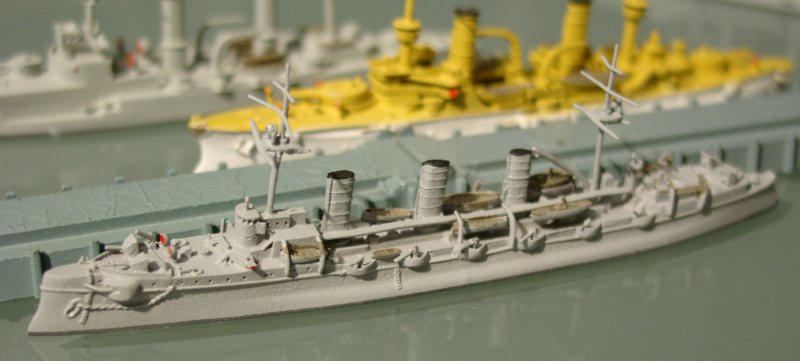
Ship models in 1/1250 scale.
Construction record