Built around a narrow mission
The design emphasized interception and quick-firing weapons, but changing torpedo-boat performance quickly undermined the concept.
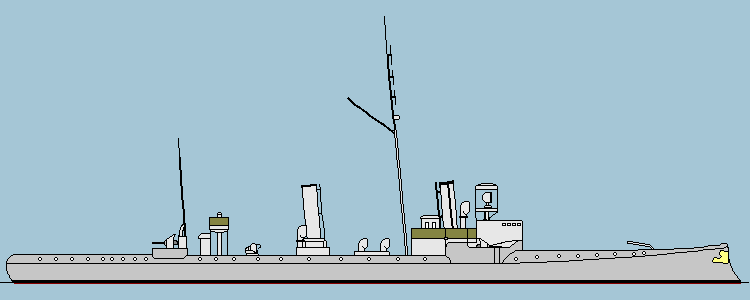
The full story
Late in the 19th century, small and fast warships could be seperated into two classes: Scouting and defence against torpedo boats. While this normally evolved into the construction of different kind of ships, the German Navy tried to fulfill these tasks with a single kind of ships, the avisos.
However there was a single class of ships specially designed to fight torpedo boats, the Comet and Meteor. It seemed as if this design was not very successful, as the Comet only saw very few active operations. During its whole lifetime, the ship had an active duty of just about half a year. The Meteor had a similar hort active career.
Like most older warships, the now classified as small cruisers were used for auxiliary harbor duty during World War I, the Comet was used as a mine hulk in Emden and the Meteor as a floating barrack in Kiel. Both ships were scrapped after the war.
Operational history
Comet is commissioned.
Training and trials, after this the ship is decomissioned in Kiel.
Recommissioned.
Decommissioned.
Recommissioned, followed by training and trials in the North Sea.
Decommissioned in Wilhelmshaven.
Transferred to Kiel.
Together with other obsolete warships, the Comet is towed to Danzig.
Reclassfied as harbor ship.
Remvoed form the list of warships.
Scrapped in Hamburg.
At a glance
Dimensions, armament, machinery and performance.
Construction record