Heavier guns for the pre-dreadnought fleet
A 28 cm main battery and powerful 17 cm secondary armament made the class a substantial advance over its immediate predecessors.
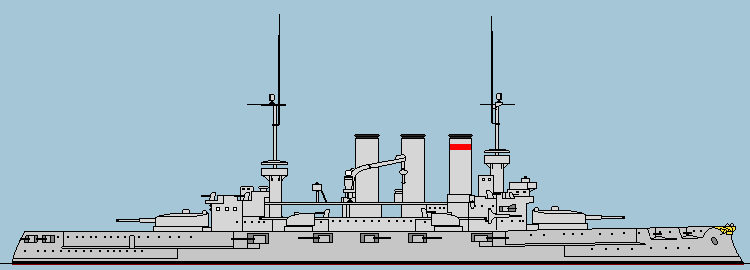
Design and service
Compared to the older German battleships, the five ships of the Braunschweig class showed a improvement mainly in the artillery component. The main artillery grew to 28 cm guns while for the first time 17 cm guns were used as secondary artillery. Being maneuverable and good seagoing ship, they tend to roll in heavy seas, bud did not take over much water as it was common for other German ships of this era.
Like their follow ups, the Deutschland class, those ships were obsolete at the outbreak of the war and their active duty was limited to coastal defence only. They were among the few old battleships that Germany was allowed to keep after World War One and they were actively used by the Reichsmarine until the mid 1930.
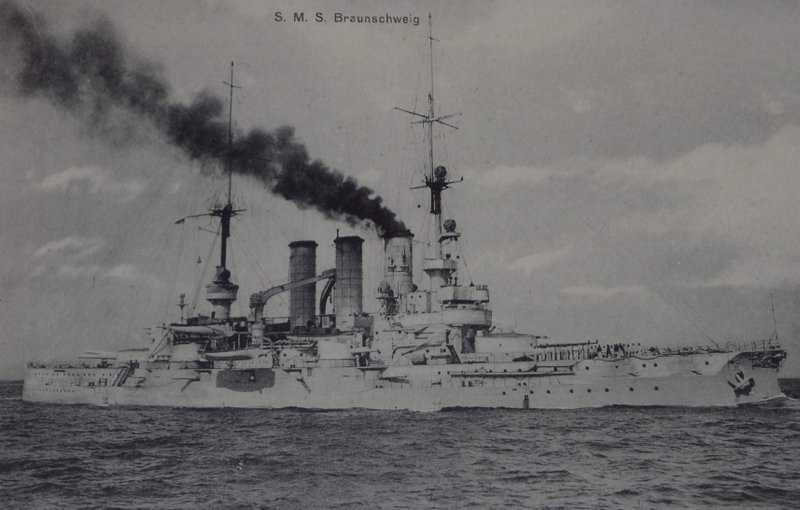
The Braunschweig was used for fleet service until July of 1916 when it was reclassified as a floating barrack. Between 1921 and 1926 it was used for fleet service in the Reichsmarine and broken down in 1931.
Operational history
Braunschweig is commissioned.
Visit to Norway.
Atlantic voyage, including a visit to Las Palmas.
Atlantic voyage, including a visit to La Coruna.
Visit to Norway.
Visit to Norway.
Decommissioned.
After the outbreak of the war, the Braunschweig is recommissioned and attached to the 4th Squadron.
Operations in the eastern Baltic Sea.
Used for coastal defenses in the North Sea.
Operations in the eastern Baltic Sea.
Operations in the Baltic Sea.
Used as a training ship.
Modernization at the Kriegsmarinewerft in Wilhelmshaven.
Recommissioned.
Visit to Norway.
Visit to Sweden.
Used as an ice breaker in the Baltic Sea.
Atlantic voyage, including a visit to La Coruna.
Fleet exercises in the Baltic sea.
Voyage ot Norway.
Decommissioned.
Scrapped.
At a glance
Dimensions, armament, protection and performance.
The archive
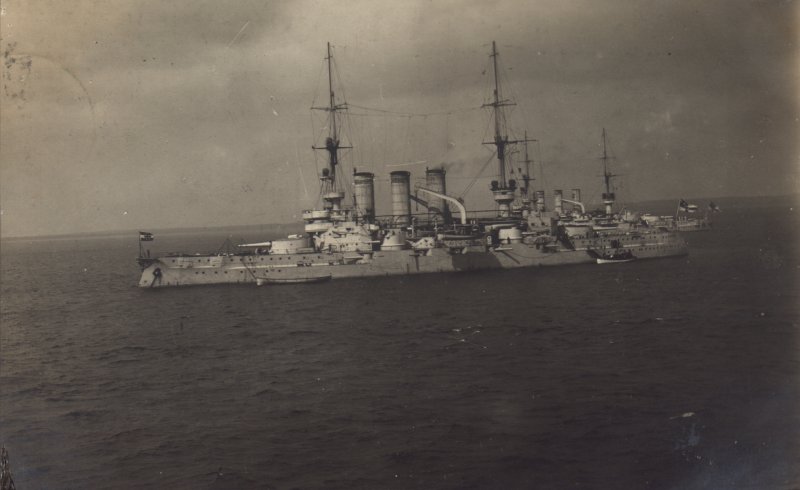
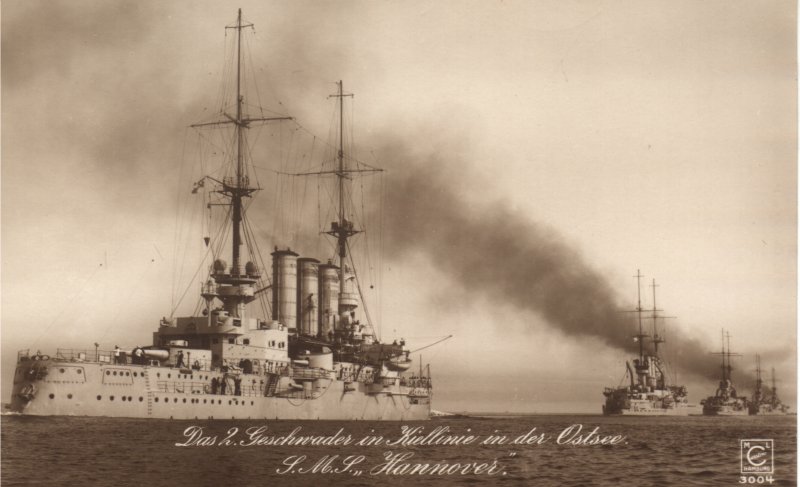
Original postcard and photographic material from the private collection.
Construction record