Cooperation between the Kriegsmarine and Luftwaffe was poor throughout the Second World War. The navy depended on aircraft controlled by another service and information had to pass through a long chain of command. On the night of 22 February 1940 that weakness reached its most destructive early-war consequence.
Mine warfare in the North Sea
During the first months of the war, German naval forces concentrated heavily on mine warfare. Destroyers carried offensive minefields close to British ports and shipping lanes, while cruisers, torpedo boats and converted vessels laid defensive fields around the German Bight. Eleven offensive destroyer operations between October 1939 and February 1940 laid mines credited with sinking 76 Allied ships.
The defensive fields contained charted, supposedly mine-free passages that German vessels could use. One of these was Weg I, a six-mile-wide route through the mine barrier known as the Westwall. Its safety depended on regular sweeping and accurate knowledge of both German and British minefields.
The 1st Destroyer Flotilla
Reconnaissance reports had described suspicious fishing vessels, trawlers and possible submarine contacts west of the defensive minefields near the Dogger Bank. The Kriegsmarine ordered six destroyers to intercept them. The sortie was designated Operation Wikinger.
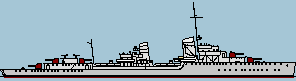 Z16 Friedrich EckoldtFlotilla leader
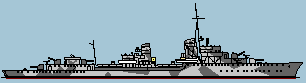 Z4 Richard Beitzen
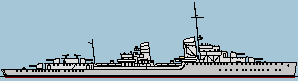 Z13 Erich Koellner
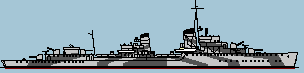 Z6 Theodor Riedel
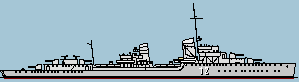 Z3 Max SchultzLost with all hands
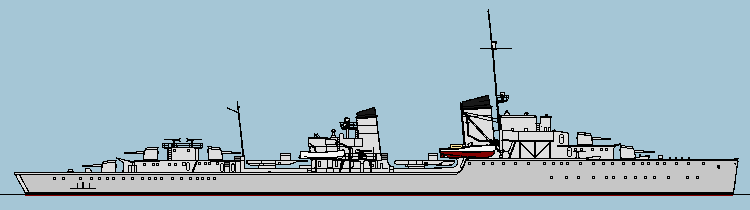 Z1 Leberecht MaasLost
Kriegsmarine
A reconnaissance mission
The flotilla expected Luftwaffe fighter cover while leaving its base and again when returning. Because the relevant commands failed to coordinate, no fighters appeared and the destroyers received no warning that German bombers would cross their route that evening.
Luftwaffe
An anti-shipping sortie
The 4th Squadron of KG 26 prepared Heinkel He 111 bombers to attack Allied coastal shipping. One aircraft, 1H+IM under Feldwebel Jäger, flew north to Sylt and then west over the dark North Sea. Its crew had not been told that German destroyers were operating ahead.
The way into the North Sea
At 19:00 the six destroyers entered Weg I at more than 25 knots, steaming in line ahead on a course of 300 degrees. The moonlit night was almost cloudless, and the ships left bright wakes in the cold water. At 19:13 lookouts heard a twin-engine aircraft. It crossed the formation twice without giving the expected recognition signals.
When the aircraft returned, Richard Beitzen and Erich Koellner opened fire with 2 cm anti-aircraft guns. The bomber returned fire. A lookout aboard Max Schultz recognized the German cross, but the report was not believed amid the confusion. At 19:43 Max Schultz transmitted her final radio message: an aircraft had been sighted against the black cloud in front of the moon.
The flotilla enters the mine-free passage Weg I.
A twin-engine aircraft is heard and then sighted.
Max Schultz sends her final radio transmission.
The first four bombs are released against Leberecht Maas.
Leberecht Maas breaks apart after further explosions.
A second major explosion is seen; Max Schultz disappears.
The surviving destroyers abandon the operation and withdraw.
The air attack
The He 111 crew had first interpreted the wake below as that of a freighter. Anti-aircraft fire convinced them that the vessel was hostile. At 19:45 four 50 kg bombs were released. Two fell into the wake, one struck Leberecht Maas between the forward superstructure and funnel and the fourth missed.
The damaged destroyer slowed and left the formation. Friedrich Eckoldt approached to assess the damage while rescue and towing gear was prepared. At about 19:56, following a second bombing run, two heavy explosions engulfed Leberecht Maas. The ship broke into two sections and sank in water approximately 40 metres deep.
False contacts and a failed rescue
The remaining destroyers slowed among survivors and began lowering boats. At 20:04 another large explosion occurred. The identity of the second ship was initially unclear. Theodor Riedel then reported a submarine contact and dropped depth charges, damaging her own rudder because the charges detonated too close.
Further supposed periscopes and torpedoes were reported almost continuously. Wreckage and the remains of the sinking destroyers were repeatedly mistaken for submarines. Rescue work gave way to a frantic but unsuccessful search for an enemy that may never have been present. Max Schultz ceased answering radio calls; none of her 308 crewmen survived.
At 20:36 the four surviving destroyers withdrew. Boats already in the water were recovered where possible, but the delay had been fatal for many men exposed to the freezing North Sea.
Adding one and one
Reports reaching Marinegruppe West initially suggested a submarine attack or an accident in the German minefield. At 23:00, however, X. Fliegerkorps reported that one of its bombers had attacked and sunk a vessel of approximately 3,000 tons on a course of 300 degrees. The reported position was inaccurate, but the ship's size and course exposed the connection.
The investigation established that both services had possessed enough information to recognize the danger. The Luftwaffe had notified the naval headquarters about bomber operations, while naval requests for reconnaissance and fighter cover showed that destroyers were at sea. A direct inquiry shortly before take-off made the overlap explicit, yet no warning was transmitted to the flotilla.
Later sweeping found British mines near the sinking area, laid on 9–10 February. The He 111 unquestionably attacked and hit Leberecht Maas, initiating the disaster. Additional German or British mine strikes may have contributed to the destruction of one or both ships. The surviving evidence does not support a completely certain reconstruction.
Operation Wikinger was not a single error but a chain: divided command, missing warnings, misidentification, friendly fire, mines and false submarine sightings.