Dimensions
- Size (Max)
- 4371 t
- Length (Total)
- 96,60 m
- Beam
- 15,13
- Draft
- 5,79
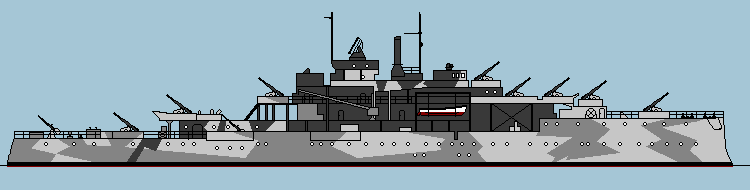
Design and service
The invasion of the Netherlands provided the Kriegsmarine with several older Dutch warships, and some of them were taken into service again.
The old coastal battleships Jakob van Heemskerck (commissioned 1906) and Hertog Hendrick (commissioned 1902) were sunk by dutch forces in May 1940, but raised by the Germans in 1941 and transferred to Kiel to reconstruct them as Floating AA batteries. The Jacob van Heemskerck was renamed as Undine.
With their eight 10,5 cm heavy AA guns, both ships were among the heaviest armed floating AA batteries and were equipped with the most up to date Radar equipment available, the so called "Würzburg-Funkmeßgerät". The obsolete engines were put out of service, therefore the ships had to be towed to their operational areas. The ships only kept its generators to supply the on board systems with power.
The Undine was recommissioned after its reconstruction between April 1942 and August 1943 in September 1943 and first moved to Peenemünde to protect the V-Weapon research facilities there. In autumn of 1944, the ship was sent to Stettin-Pölitz to support the air defenses of the nearby coal hydrating facilities. In 1946 the ship was given back to the Netherlands where it was converted into a floating barrack. Renamed to Neptunus it was used in this role since February 1948. In MAy 1975, the ship was sold to be scrapped.
At a glance
Dimensions, armament and performance.
The archive
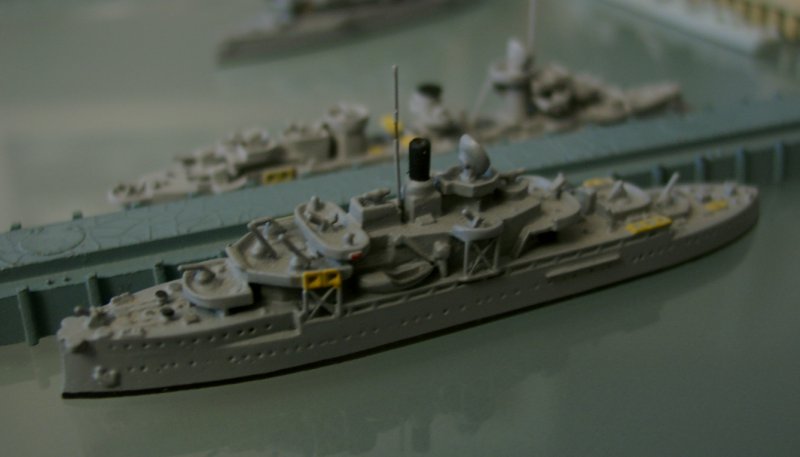
Ship models in 1/1250 scale.
Construction record