The leap to 38 cm artillery
Eight 38 cm guns brought German battleship armament level with the newest foreign designs, but only two members of the class were completed.
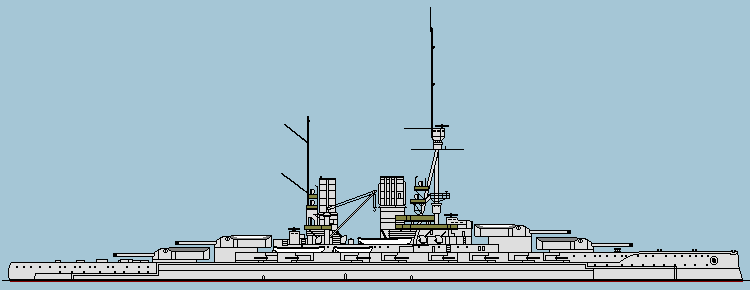
Design and service
The Bayern class were the last German battleships of the Imperial Navy, only two of the four ships were completed during World War I. Construction started after a huge discussion about the main artillery for those ships ranging from 35,6 to 40 cm. The final design included eight 38 cm guns, the same size choosen for the newest British battleships (Queen Elizabeth class) although this was unknown at that time.
The general construction was based on the previous battleship class, the König class, and again it was planed to add a diesel engine to the ship to enhance their endurance. Since the problems of building powerful diesel engines were known from the previous battleships, only the last two ships of the Bayern class were planed to include the diesel engine, enabling them to operate ot only n the North Sea, but also in the North Atlantic.
Those ships are often seen as "unofficial" predecessors of the Bismarck class battleships of the Kriegsmarine and are best compared to the British Revenge class.
Bayern and Baden were commissioned during wartime, but both ships came too late for the battle of Jutland and did not see many actions during the war. Both were scuttled at Scapa Flow, and Baden was one of the few ships which could be saved before sinking and was sunk as a target ship in 1921. Construction of the Sachsen was stopped about 9 months before completion and was broken down in 1921. Würtemberg was 12 months away from completion when construction was stopped. The ship was also broken down in 1921.
Operational history
Baden is commissioned
Training and trials, Baden gets Flagship of the Hochseeflotte
Stationed in Kiel during the landing operations at the Baltic Island to prevent British ships to enter the Baltic Sea
Unsuccessful raid in the northern North Sea up to the Stavanger area.
Interned at Scapa Flow. The Baden was first not listed as one of those ships to be interned at Scapa Flow, therefore it arrived there three weeks after the other ships.
Scuttled by own crew, but towed into shallow water
Baden is afloat again
Used as a target ship, sunk southwest of Portsmouth.
At a glance
Dimensions, armament, protection and performance.
The archive
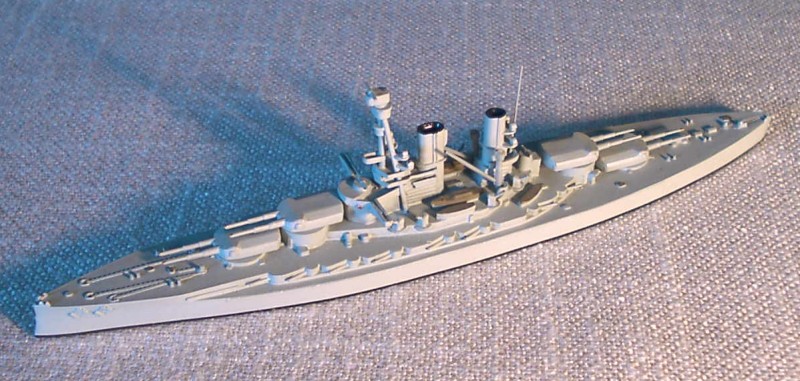
Ship models in 1/1250 scale.
Construction record