Built under the Naval Laws
The class translated Germany's expanding naval program into five balanced pre-dreadnoughts intended for concentrated service with the battle fleet.
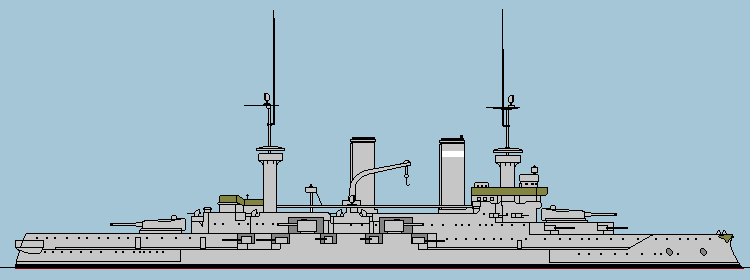
Design and service
The Wittelsbach class formed part of the major German fleet-building program begun in the final years of the 19th century. Similar in armament and armor protection to the preceding Kaiser Friedrich III class, these ships and their immediate successors formed the core of the German battle fleet until the arrival of the Nassau-class dreadnoughts in 1909.
The very maneuverable ships were already outdated at the outbreak of World War I and were actively used only in the first years. Until 1916, all five were used for fleet services, Schwaben was mainly used as artillery training ship up to 1911 when the Wettin took over this role until 1914. In 1916, all of them were removed from active fleet service. The Wittelsbach and Schwaben were then used as fleet tenders until 1919 when they were converted into mother ships for small fast attack boats, able to carry 12 of them. After only two years in this role, they were broken down. Wettin was also used as a fleet tender form 1916 on and scrapped in 1922.
Operational history
Training and trials with shipyard crew.
Wettin is commissioned.
Training and trials. After that, the ship is attached to the 1st Squadron and takes part in all fleet operations an manouvers in the following years.
Wettin is rammed by the Kaiser Karl der Grosse, but only lightly damaged.
Decommissioned.
Recommissioned as artillery training ship.
After the outbreak of world War I, the Wettin is attached to the 4th Squadron.
Operations in the eastern Baltic Sea.
Operations in the eastern Baltic Sea.
Patrol duty in the North Sea.
Operation north of Gotland.
Patrol duty in the North Sea.
Operations in the eastern Baltic Sea.
Put into reserve status with reduced crew.
All 24 cm guns are removed.
Used as floating barrack in Kiel.
Used as floating barrack in Cuxhaven.
Used as mine hunter tender / mother ship.
Sold for scrap.
Scrapped in Rönnebeck.
At a glance
Dimensions, armament, protection and performance.
The archive
Original postcard and photographic material from the private collection.
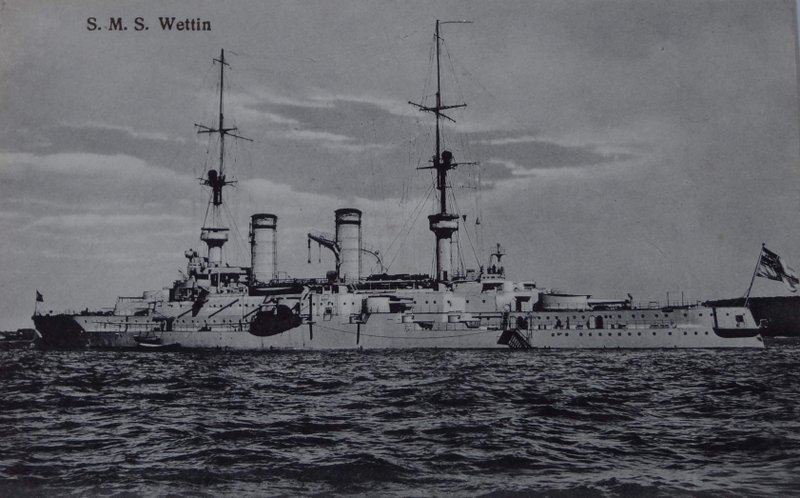
The archive
Ship models in 1/1250 scale.
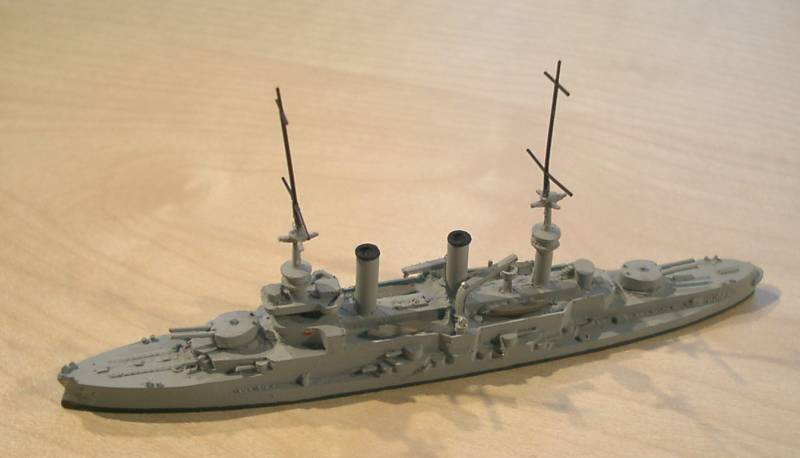
Construction record