Fast cruisers designed to lay mines
Powerful machinery built for a Russian battlecruiser was repurposed in two exceptionally fast minelaying cruisers.
The full story
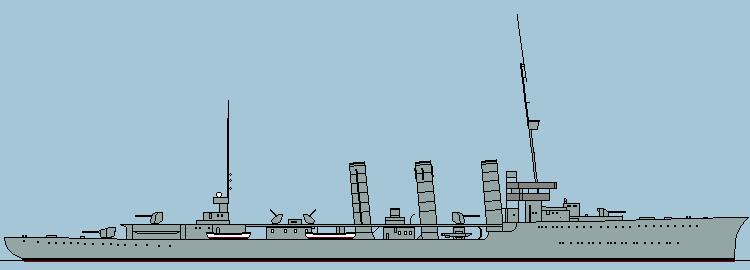
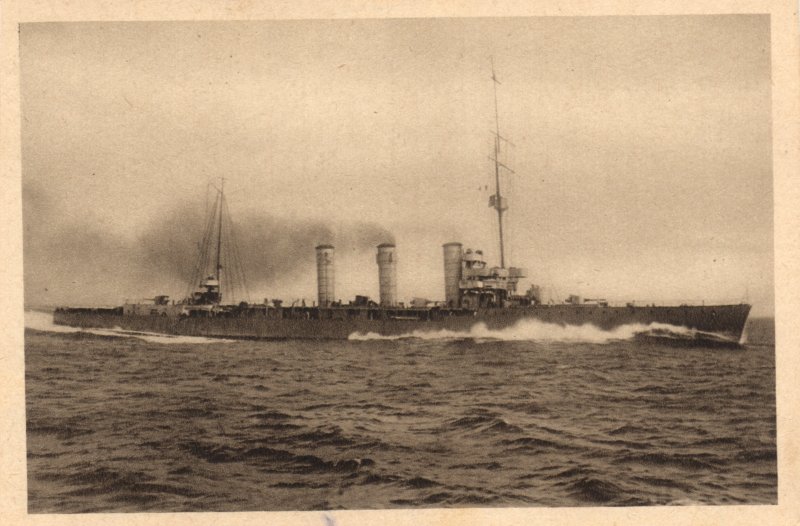
The two cruisers (official German designation is Kleine Kreuzer) were quite different to other German cruisers. They were built as fast mine layers, there they had the capacity of 400 mines to be stored on their main deck and because of this, their armament consisted of lesser, but more powerful guns than other German small cruisers. Their turbines were originally built for the Russian battlecruiser Navarin which was ordered in Germany shortly before the war.
Since Bremse and Brummer were designed to operate close to the enemy coastline, the constructors tried to reassemble the appearance of the British Arethusa class cruisers to give the ships a special "camouflage".
Their most famous operation was the attack on a British convoy from Bergen to the Shetland islands on 17.10.1917, consisting of twelve merchant ships, escorted by two destroyers and two armed trawlers. The German ships could close up to 3000 meters and confused the British by their appearance and identification signals. When the Bremse and Brummer opened fire at close range, the British escorts had no chance to escape, both destroyers and 10 merchant ships were sunk.
Both cruisers shared the fate of most German ships, they were scuttled at Scapa Flow by their own crew. Bow and port side of the Bremse remained exposed in low water and in 1929 the ship was turned upside down and the superstructure was removed to aid raising. The wreck was broken up in 1932-1933.
Operational history
Brummer is commissioned.
Attached to the II. reconnaissance group.
Attached to the IV. reconnaissance group.
Brummer is part of the forces, laying a mine field between Norderney and Helgoland.
Operation against allied merchant ships between Scotland and Norway together with the Brummer. In a one hour battle, one destroyer and 8 merchants are sunk another destroyer is damaged.
Another unsuccessful raid against allied shipping near the Doggerbank together with the small cruiser Stralsund and several torpedo boats.
Two mine laying operations, one together with the small cruiser Straßburg.
Interned at Scapa Flow.
Scuttled with the rest of the Hochseeflotte, sunk at 13:05.
At a glance
Dimensions, armament, protection and performance.
The archive
Construction record