A mature wartime cruiser
Improved armament, speed and endurance made these ships effective late-war scouts, though strategic conditions limited their use.
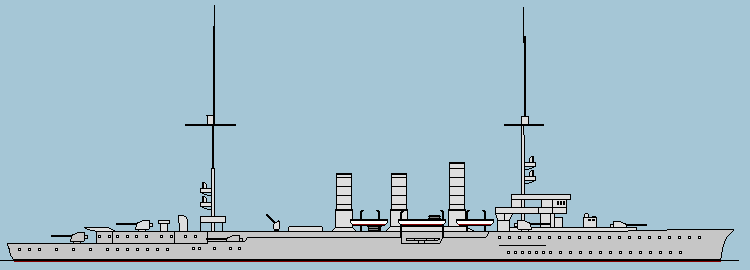
The full story
The four ships of the Königsberg II class were part of the constant development of small cruisers in Germany. Like their half sisters, the Pillau class (which original was built for Russia after modified plans of the Königsberg II class) they were equipped with 15 cm guns, giving them a much higher offensive potential than the older cruisers, only equipped with 10,5 cm guns.
Like other German small cruisers, they had a mixed coal/oil fires boiler system. They were maneuverable ships, but their stern tended to take over much water at high speed.
Königsberg II took part in fleet operation since 1916, including the operations at the Baltic Islands and the Cruiser Battle in the North Sea on 17.11.1917. It was delivered to France in 1920 where it was renamed to Metz. It was kept in active service until 1933 and scrapped three years later.
At a glance
Dimensions, armament, protection and performance.
Construction record